Understanding Your Options for Legal Representation: A Breakdown from Our Strategy Session

Florida Family Law

Understanding Your Options for Legal Representation: A Breakdown from Our Strategy Session

Navigating a legal process, especially something as significant as a divorce or family law matter, can feel overwhelming. To help simplify this journey, we’ve broken it down into four distinct stages and offer several representation options to suit different needs and budgets. Here’s a summary of the strategies and services our firm provides:

The Four Stages of the Legal Process

  1. Preparation and Filing: This initial stage involves drafting and filing the necessary legal pleadings to initiate your case. It also includes ensuring that all required documents are in order and filed with the court, and that the other party is properly served.

  2. Discovery: The second stage focuses on gathering and exchanging financial and other pertinent information between parties. This stage may also involve filing motions to compel or for contempt if one party fails to comply with discovery requirements.

  3. Negotiation and Mediation: This stage includes negotiating terms and attempting to reach a settlement through mediation. It’s often a critical phase where many cases are resolved without the need for a trial.

  4. Trial and Hearings: The final stage occurs if a settlement cannot be reached. It involves preparing for and attending trial or hearings before a judge to resolve any outstanding issues.

Our Representation Options

Based on these stages, we offer several options for legal representation:

1. Full Representation (Hourly Rate)
   – Overview: This option provides comprehensive representation from start to finish. Our attorneys and paralegals handle all aspects of your case, including preparation, discovery, negotiation, mediation, and trial if necessary.
   – Billing: Services are billed hourly. This is the most thorough level of representation and is suited for those who want complete professional handling of their case.

2. Flat Fee Through Mediation
   – Overview: This option covers all services up to and including mediation. It includes filing the necessary paperwork, handling discovery, and attending mediation with you to negotiate a settlement.
   – Benefit: If your case is settled during mediation, no further fees are required, making it a cost-effective option for those who anticipate resolving their case without going to trial.

3. Do-It-Yourself Coaching and Limited Appearance Services
   – Overview: For those who prefer to handle much of their case independently, this option provides guidance and assistance in stages.
   – Stage 1: Preparation and Filing Assistance: We assist you in preparing all the necessary documents for filing and guide you through the filing process.
   – Stage 2: Discovery Assistance: You handle the collection and filing of discovery documents, and we provide review and preparation assistance.
   – Stage 3: Mediation Support: Should you choose, we can also represent you at mediation for an additional fee.

This option is highly customizable, allowing you to control costs while still having professional guidance available when needed.

Choosing the Right Option for You

The best representation option depends on your specific circumstances, including the complexity of your case, your budget, and your comfort level with handling certain aspects independently. Whether you need full representation or just some guidance along the way, we are here to support you through each stage of your legal journey. If you have any questions about these options or need help deciding which one is best for you, please reach out to our office. We’re here to help guide you through this process with clarity and confidence.

Talk it through before you sign anything

Your intake goes straight to our team — start with a free consult or move straight ahead.
Navigating Student Loan Debt in Divorce: A Comprehensive Guide

Florida Family Law

Navigating Student Loan Debt in Divorce: A Comprehensive Guide

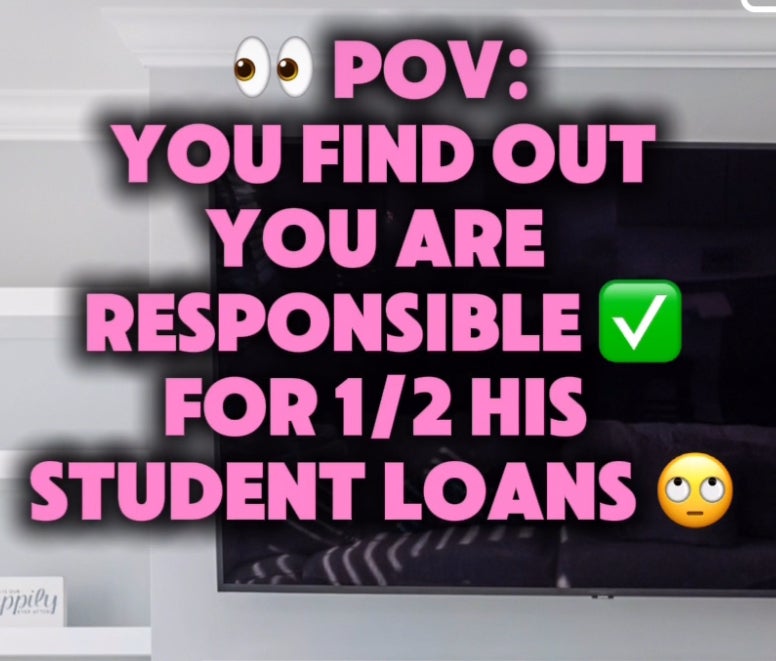
Introduction: Divorce is a challenging process that involves the division of assets, debts, and the reevaluation of financial responsibilities. Among the many financial considerations, student loan debt often emerges as a complex issue that requires careful attention. In this blog, we’ll explore the intricacies of student loan debt in divorce, providing you with the knowledge and tools to navigate this often-overlooked aspect of marital dissolution. Understanding Marital and Non-Marital Debts: Before delving into the specifics of student loan debt, it’s essential to understand the distinction between marital and non-marital debts in the context of divorce. Marital debts are those incurred during the marriage and are typically considered joint responsibilities. Non-marital debts, on the other hand, are those that a spouse incurs before the marriage or after separation, and they generally remain the sole responsibility of the spouse who incurred them. Student Loans as Marital Debt: Student loans can fall into either category, depending on the circumstances. If a student loan was taken out before the marriage, it is usually considered non-marital debt. However, if the loan was used to support the household during the marriage, or if both spouses benefited from the education or training funded by the loan, it may be deemed marital debt and subject to equitable distribution. Potential Risks of Allocating Debt: When allocating debt in one’s name to the other spouse during a divorce, it’s important to be aware of potential risks. These include:
  • Credit Impact: If the debt is allocated to your spouse but remains in your name, any missed payments by your spouse can negatively impact your credit score.
    – Enforcement Challenges: Creditors are not bound by the divorce decree, so if your spouse does not pay the debt, you may have to take legal action to enforce the decree.
    – Legal and Financial Complications: Disputes over debt allocation can lead to prolonged legal battles and increased financial strain.
    – Debt Collection Risks: If the debt is not paid, you could face harassment, wage garnishment, or other collection actions.
    – Potential for Lawsuits: You might be named in a lawsuit for non-payment, despite the divorce decree’s allocation of responsibility.
    – Difficulty in Refinancing: If you plan to refinance a debt in your name, your spouse’s deteriorated credit could complicate the process.
Documentation is Key: Proper documentation is crucial when determining the classification of student loan debt in a divorce. Keep records of when the loans were taken out, how they were used, and whether both spouses benefited from the education or training. This documentation can be instrumental in court or during negotiations with your spouse. Communication and Planning: Open and honest communication with your spouse about student loan debt is vital. Discuss how you plan to handle the debt before you separate or begin the divorce process. This can help avoid disputes and make the division of debts smoother and more equitable. Legal Assistance: Given the complexity of student loan debt in divorce, it’s wise to seek legal counsel. An experienced family law attorney can provide guidance on how to address student loan debt in your divorce settlement. They can help you understand your rights and responsibilities and ensure that the division of debts is fair and legally sound. Conclusion: Student loan debt can complicate the divorce process, but with the right information and approach, it’s a challenge that can be managed. By understanding the distinction between marital and non-marital debts, maintaining thorough documentation, and seeking legal advice, you can navigate the complexities of student loan debt in divorce and move forward with confidence. Remember, while divorce marks the end of a relationship, it’s also an opportunity for a fresh start, and with careful financial planning, you can ensure that your new beginning is secure and debt-free.

Talk it through before you sign anything

Your intake goes straight to our team — start with a free consult or move straight ahead.

WHAT OPTIONS ARE AVAILABLE IN A FLORIDA DIVORCE WHEN THE RESPONDENT IS AVOIDING SERVICE

Florida Family Law

WHAT OPTIONS ARE AVAILABLE IN A FLORIDA DIVORCE WHEN THE RESPONDENT IS AVOIDING SERVICE

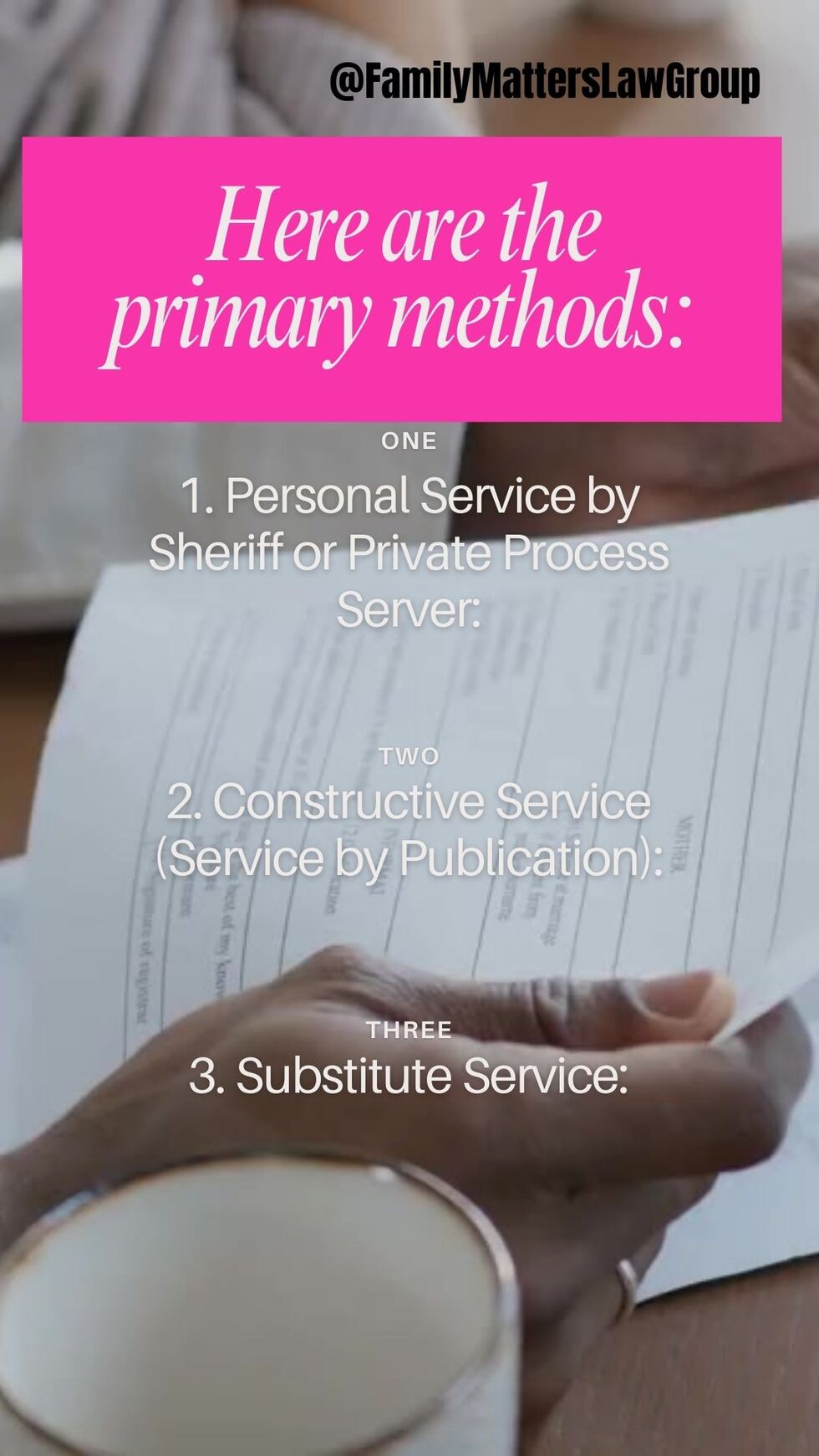
In Florida, if the respondent in a divorce case is avoiding service, you have several options to ensure they are properly served. Here are the primary methods:
  1. Personal Service by Sheriff or Private Process Server:
    • The petitioner can hire the sheriff’s office or a private process server to personally deliver the divorce papers to the respondent. If the respondent is actively avoiding service, the process server may make multiple attempts, including at different times and locations.
  2. Constructive Service (Service by Publication):
    • If personal service is not possible because the respondent is avoiding or their whereabouts are unknown, the petitioner can seek approval from the court to serve by publication. This involves publishing a notice of the divorce in a newspaper that is published in the county where the case is filed. Specific steps include:
      • Filing an affidavit of diligent search and inquiry detailing the efforts made to locate the respondent.
      • The notice must be published once a week for four consecutive weeks.
      • After publication, a proof of publication must be filed with the court.
  3. Substitute Service:
    • If the respondent is avoiding service at their residence, the process server may leave the papers with any person residing at the respondent’s usual place of abode who is 15 years of age or older and inform them of the contents.
  4. Service by Mail:
    • In some cases, if the respondent agrees, the divorce papers can be served by mail. The respondent must sign an Acceptance of Service, acknowledging receipt of the documents.
  5. Service on an Attorney:
    • If the respondent has an attorney, the papers can be served on the attorney, provided the attorney accepts service on behalf of the respondent.
  6. Service Outside the State:
    • If the respondent is out of state, they can be served according to the service rules of the state where they are located or by any method reasonably calculated to give actual notice.
It’s important to follow all statutory procedures precisely to ensure service is valid and to avoid delays in the divorce proceedings. Consulting with a process server or legal professional experienced in Florida family law can help navigate these options effectively.

Talk it through before you sign anything

Your intake goes straight to our team — start with a free consult or move straight ahead.
Imputation of Income in Florida Family Law Cases

Florida Family Law

Imputation of Income in Florida Family Law Cases

Imputation of Income in Florida Family Law Cases In Florida family law, the concept of imputation of income plays a crucial role in ensuring fairness during the determination of child support and alimony. Imputation of income involves assigning an income value to a party, even if they do not actually earn that amount. This measure prevents individuals from evading financial responsibilities by remaining unemployed or underemployed. Understanding the Concept Imputation of income is used when a court believes that a party is deliberately earning less than they could. The court can assign an income level based on several factors, including previous employment, qualifications, and job market conditions. Examples of Imputation of Income
  1. Voluntary Underemployment: Imagine a scenario where a parent has a high-paying job but quits to take a lower-paying job or works part-time without a justified reason. The court may impute income based on their previous earnings.
  2. Refusal to Work: If a parent chooses not to work at all, the court might impute income based on their capability to work and market conditions. For instance, if a parent with a college degree decides not to seek employment, the court can assign an income that reflects their earning potential.
  3. Self-Employment Manipulation: In cases where a self-employed individual manipulates their income to appear lower, the court can impute income based on their business’s potential earnings and historical performance.
Potential Impacts of Imputation of Income
  1. Fair Child Support Calculations: Imputation ensures that child support calculations reflect what a parent could earn, rather than what they choose to earn. This prevents unfair burdens on the custodial parent and ensures that children receive adequate support.
  2. Equitable Alimony Awards: In alimony cases, imputing income ensures that a spouse cannot avoid financial obligations by deliberately earning less. It promotes fairness and equity in financial settlements.
  3. Deterrence of Manipulative Behavior: The potential of income imputation acts as a deterrent for individuals considering underemployment or unemployment to evade financial responsibilities.
Legal Framework and Rules Florida Statutes Section 61.30(2)(b) outlines the guidelines for imputation of income in child support cases. The court considers several factors, including:
  1. Recent Work History: Previous jobs and earnings are evaluated to determine the potential income.
  2. Occupational Qualifications: The individual’s skills, education, and qualifications are considered.
  3. Prevailing Earnings Level: The court examines the job market and typical earnings for similar work in the community.
In alimony cases, Florida Statutes Section 61.08 allows the court to impute income based on similar factors, ensuring that both parties are contributing fairly to post-divorce financial arrangements. Conclusion Imputation of income is a vital tool in Florida family law, ensuring that financial responsibilities are met fairly and equitably. By considering an individual’s employment potential and qualifications, the court can prevent manipulative behaviors and promote the best interests of children and spouses. Understanding the rules and impacts of income imputation helps in navigating family law cases with clarity and fairness. For more detailed information on specific cases and judicial interpretations, examining Florida Statutes and recent case law is recommended. If you have any specific questions or need assistance with a family law matter, feel free to reach out.

Talk it through before you sign anything

Your intake goes straight to our team — start with a free consult or move straight ahead.

Understanding Child Support Calculations in Florida: A Lawyer’s Perspective

Florida Family Law

Understanding Child Support Calculations in Florida: A Lawyer’s Perspective

This is Leisa, your attorney from our family law firm in Florida, breaking down an essential topic: child support calculations in Florida.
If you’re navigating the complexities of child support, whether you’re doing it on your own or with professional assistance, it’s crucial to understand how various factors affect calculations. Nazarena and I regularly handle child support cases in Florida, offering full legal representation and DIY Coaching. Today, I’ll outline the major points we discussed in our recent podcast. Key Takeaways from Child Support Calculations
1. Understanding the Basics:
   – Our child support calculator is tailored for Florida’s laws. It demands specific details like the number of children, their initials, and their dates of birth. These factors are vital as child support values change when children age.
2. Impact of Overnights:
   – The number of overnights each parent has plays a significant role. For instance, in a 50/50 timeshare, each parent would typically have 182.5 overnights, which can result in a zero balance for child support if incomes are comparable. Variations in this schedule drastically impact the owed amount.
3. Income Considerations:
   – Income is a primary determinant. Let’s say Jim makes $5,000/month and Nancy makes $6,000/month. Nancy would owe child support due to her higher income. The calculations adjust instantly as income levels are inputted.
4. Additional Income Sources:
   – All potential income streams, such as Social Security benefits and rental income, must be reported. These additional incomes are included in the calculator to give a comprehensive assessment of financial responsibility.
5. Health Insurance and Alimony:
   – The expenses for health insurance and any alimony received also influence child support. For example, if Jim pays $300 monthly for health insurance, with $100 attributed to the children, and Nancy pays $200 for her own policy, these figures will modify the child support amount. Similarly, alimony received will alter the incomes and, consequently, the support owed. Important Points to Remember
– Child’s Age Matters:
  – The age and birthday of each child can impact the support amount, as once a child ages out of minor status, the support requirements change.
  – Accurate Overnights Count:
  – Ensure the count of overnights is precise. Misstating this can result in incorrect support calculations.
  – Update for Income Fluctuation:
  – Always update the calculator for any changes in income to keep the child support amounts accurate and fair.
  – Health and Additional Costs:
  – Don’t overlook additional expenses including health insurance and potential medical costs, as they are critical for precise support obligations. Legal Advice: FOR EDUCATIONAL PURPOSES ONLY – Seek professional legal advice for tailored guidance. We offer full representation and legal coaching to empower you with the right strategies and knowledge. Navigating child support doesn’t have to be stressful—understanding these critical aspects can simplify the process. For further assistance or personalized legal advice, feel free to reach out to us. Nazarena and I are here to support you every step of the way. 
For more detailed insights, be sure to listen to our full video on this topic. Stay informed and take control of your family law matters with confidence!
—
Leisa & Nazarena

Talk it through before you sign anything

Your intake goes straight to our team — start with a free consult or move straight ahead.
Understanding Child Support Calculations in Florida

Florida Family Law

Understanding Child Support Calculations in Florida

Understanding Child Support Calculations in Florida

Navigating the complexities of child support in Florida can be a daunting task, particularly for unmarried parents who are trying to understand their financial responsibilities. This blog aims to demystify the process and provide a clear guide on how child support is calculated in the Sunshine State.

Income Considerations

In Florida, child support calculations begin with a comprehensive look at what constitutes income. This includes not only wages and salaries but also passive income streams such as dividends, rental income, and even certain business-related expenses. For instance, if a parent owns a business, the income generated from that business may be factored into the child support calculations. It’s essential to disclose all sources of income to ensure a fair assessment.

Algebra Formula

The state of Florida uses a specific algebraic formula to determine the amount of child support. This formula considers various factors, including:
  • Each parent’s monthly income
  • Healthcare and insurance costs
  • Childcare expenses
  • The number of overnight stays the child has with each parent
The basic formula can be represented as follows: CS = IN \times (1 – HC – CC) \times ONCS=IN×(1−HC−CC)×ON Where:
  • ( CS ) is the child support amount
  • ( IN ) represents the combined income of both parents
  • ( HC ) stands for healthcare costs
  • ( CC ) is childcare costs
  • ( ON ) is the number of overnights with the child

Modifications

Child support is not set in stone and can be modified if there is a substantial change in circumstances. If a parent loses their job or there’s a significant increase in healthcare costs, either parent can request a review of the child support order. It’s important to file for modifications legally and promptly to reflect the current financial situation accurately.

Special Scenarios

There are cases where one parent may contribute in-kind income, such as providing housing or covering utility bills. These contributions can be factored into the child support calculations. It’s crucial to keep detailed records of these contributions as they can significantly impact the overall calculation. In conclusion, understanding child support calculations in Florida requires a clear grasp of income sources, a mathematical approach to the formula used, and an awareness of how changes in circumstances can affect the support amount. By keeping these key points in mind, parents can navigate the child support system more effectively and ensure that their children’s needs are met.
This blog provides a general overview and should not be taken as legal advice. For specific cases, it’s recommended to consult with a family law attorney who can provide guidance tailored to your situation.Our office offers full legal representation, DIY Legal Coaching and Limited Representation (pay as you go). 

Talk it through before you sign anything

Your intake goes straight to our team — start with a free consult or move straight ahead.

Navigating Divorce for Business Owners in Florida

Florida Family Law

Navigating Divorce for Business Owners in Florida


Practical Insights and Legal Considerations for Protecting Your Business During Divorce


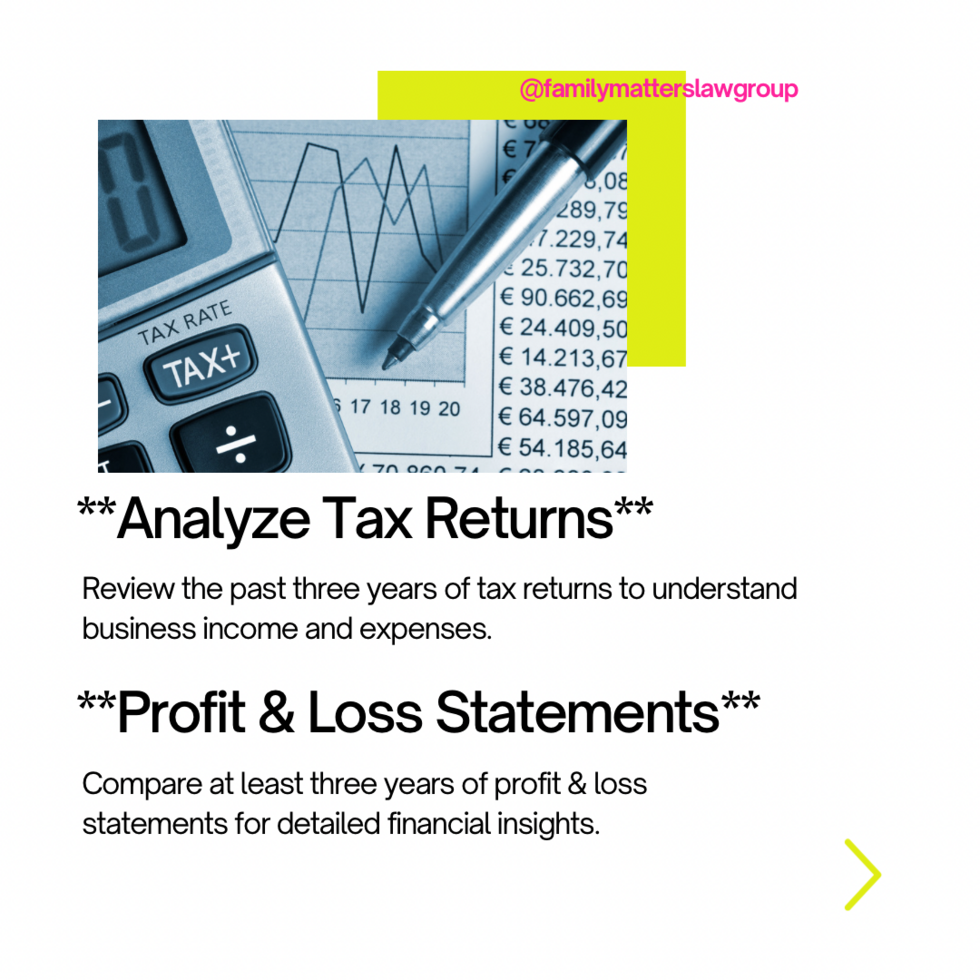
Marriage and business ownership can be a delicate balance, but what happens when that balance is disrupted by divorce? In this episode of the FMLG Podcast, hosts Nazarena and Leisa delve into the complexities surrounding business ownership and divorce in Florida. Drawing from real-life scenarios and legal expertise, this episode offers crucial insights for business owners facing the possibility of divorce. Understanding the Basics: How Divorce Affects Business Ownership When a married couple decides to divorce, one of the first concerns is often the impact on any jointly owned businesses. The situation becomes more complicated when the business serves as the primary source of income for both parties. According to Leisa, the key documents to assess in such cases are the articles of incorporation, tax returns, and profit and loss statements for at least the past three years. These documents can provide a clear picture of the business’s financial health and help both parties understand what they are entitled to.

Essential Documents for Business Valuation
1. Articles of Incorporation: These documents indicate the business’s structure and ownership details, such as whether it is an S corporation or another type of entity.
  
2. Tax Returns: Reviewing at least three years’ worth of tax returns helps gauge the business’s profitability and understand its financial trajectory.
  
3. Profit and Loss Statements: These statements offer a detailed breakdown of income and expenditures, crucial for a comprehensive valuation.
  
4. Contracts and Future Income: Any existing contracts or expected future income must be considered, as these can significantly impact the business’s valuation during divorce proceedings.
Continuing to Work Together: A Risky Proposition
While the idea of both spouses continuing to work in the same business post-divorce might seem feasible, Leisa strongly advises against it. She recounts a scenario where a nurse practitioner managed her cardiologist husband’s practice, only for their divorce to pose significant complications. Though they initially considered working together during the transition, it quickly became evident that a structured separation of duties and eventual departure was necessary to protect their income and assets.

Valuation Differences: Tangible vs. Intangible Assets
When it comes to business valuation, not all businesses are created equal. Nazarena highlights the various types of businesses, from those with tangible assets, like a construction company with millions in equipment, to service-based businesses primarily driven by the owner’s reputation and goodwill. Leisa elaborates that the latter often have little tangible value apart from computers, phones, and other basic equipment. In such cases, the business’s worth lies mainly in the owner’s professional reputation and client relationships.

Equitable Distribution and Buyouts Florida follows the principle of equitable distribution, meaning that in the absence of a prenuptial agreement, businesses formed during the marriage are considered marital assets. Typically, the spouse more involved in running the business will retain ownership while buying out the other spouse’s share. For example, a construction business with substantial tangible assets would require a detailed assessment to determine a fair buyout price for the non-operating spouse.
Profit and Loss: Not Just for Taxes
One of the most enlightening points Leisa makes is about understanding Profit and Loss (P&L) beyond the scope of tax preparations. While tax returns provide a general overview, P&L statements dive into the specifics, revealing expenditures that can indirectly affect alimony and child support calculations. For instance, if a business covers personal expenses like car payments or meals, these could be deemed income when calculating support obligations.
Key Takeaways: Legal Preparation and Practical Steps
1. Legal Consultation: Consult a family law attorney experienced in handling divorces involving business ownership.
  
2. Documentation: Gather all necessary documents well in advance to ensure an accurate business valuation.
  
3. Financial Planning: Consider hiring a forensic accountant if the business has substantial assets or complex financials.
  
4. Transition Planning: Create a clear plan for transitioning roles and responsibilities within the business to minimize disruption.
Conclusion
Divorce is never easy, especially when a business is involved. Understanding the legal and practical considerations can help business owners navigate this challenging time more effectively. The insights shared by Nazarena and Leisa highlight the importance of thorough preparation and informed decision-making to protect both personal and business interests during a divorce. Tune in to the FMLG Podcast for more episodes that demystify family law and offer practical legal advice.

Talk it through before you sign anything

Your intake goes straight to our team — start with a free consult or move straight ahead.

Understanding the Impact of Voluntary Retirement on Alimony in Florida: A Closer Look at the New Legal Framework

Florida Family Law

Understanding the Impact of Voluntary Retirement on Alimony in Florida: A Closer Look at the New Legal Framework

In a significant development for family law in Florida, the codification of new case law into Florida Statute 61.14 has introduced a comprehensive framework for courts to consider when deciding on the reduction or termination of alimony due to the obligor’s voluntary retirement. This change brings clarity and structure to a previously nebulous area, potentially affecting numerous families and individuals navigating the complexities of alimony adjustments. Here’s an in-depth analysis of the factors that courts will now consider under this new legal landscape.

1. Age and Health of the Obligor

The obligor’s age and health status are critical considerations. This factor recognizes that as individuals age, their capacity to work and earn may naturally diminish, rendering retirement not just a choice but a necessity for some.

2. Nature and Type of Work

The specific nature and demands of the obligor’s work play a significant role. High-risk or physically demanding jobs might justify earlier retirement, impacting alimony responsibilities.

3. Income Comparisons

Courts will examine the income levels of both parties during and after the marriage. This comparison aims to ensure that any decision on alimony adjustments is made within the context of the parties’ financial realities post-divorce.

4. Need and Abilities

The financial needs of the obligee and their ability to meet those needs independently will be scrutinized. This ensures that adjustments to alimony do not unjustly impoverish the receiving party.

5. Economic Impact on the Obligee

The potential economic effects of reducing or terminating alimony on the obligee are a paramount concern, ensuring that the basic living standards are maintained to the extent possible.

6. Customary Retirement Age

The standard retirement age within the obligor’s profession offers a benchmark, acknowledging that not all careers have the same expectancy or capacity for extended work life.

7. Motivation for Retirement

Understanding the obligor’s reasons for retirement is essential. Is retirement a choice made for leisure, or is it compelled by health or industry standards? This factor seeks to uncover the motivations behind the decision to retire.

8. Benefits Post-Retirement

The consideration of social security, retirement plans, and pension benefits available to both parties post-divorce ensures that financial support mechanisms are equitably accounted for in any alimony adjustment.

9. Equity and Justice

Finally, a catch-all provision allows the court to consider any other factor deemed necessary to achieve fairness and justice between the parties. This ensures flexibility in the law’s application, allowing for unique circumstances to be taken into account.  As this new legal framework unfolds, its implications for both obligors and obligees in Florida are profound. This structured approach to evaluating voluntary retirement in the context of alimony adjustments marks a pivotal shift toward balancing the financial realities of retirement with the needs and rights of ex-spouses. Legal professionals, divorcing parties, and those considering retirement will need to navigate these considerations carefully, ensuring that decisions are made in light of this comprehensive new statute. In conclusion, the addition of these factors into Florida Statute 61.14 heralds a more nuanced and equitable approach to handling the intersection of retirement and alimony. For many, it will require a thoughtful reassessment of their financial planning post-divorce and a careful consideration of the timing and nature of retirement. This development underscores the importance of legal guidance in such matters, emphasizing the role of informed legal counsel in achieving fair and sustainable outcomes for all parties involved. As we continue to observe the practical implications of this statute, one thing is clear: the landscape of alimony adjustments in Florida has been indelibly changed, aiming for a balance that considers the evolving financial and personal circumstances of both obligors and obligees. TO BOOK A STRATEGY AND CONSULTATION WITH LEISA OR NAZ – CLICK HERE. 

Talk it through before you sign anything

Your intake goes straight to our team — start with a free consult or move straight ahead.

Navigating Temporary Support in Florida Divorce Cases: Insights and Implications

Florida Family Law

Navigating Temporary Support in Florida Divorce Cases: Insights and Implications

In the labyrinth of divorce proceedings, temporary support emerges as a pivotal yet often misunderstood component. This financial aid, designed to sustain a spouse through the turbulent times of legal separation, carries with it nuances and legal precedents that merit a closer examination. Florida’s approach to temporary support during divorce proceedings offers a unique lens through which to understand these complexities.

Understanding Temporary Support

At its core, temporary support in Florida is intended to provide financial stability to a spouse during the active phase of a divorce suit. This is a critical lifeline for many, ensuring that the financial upheaval often accompanying divorce does not leave them without necessary resources. However, the temporal nature of this support — underscored in the case of Digiacomo v. Mosquera — highlights its primary function: a temporary measure, strictly confined to the duration of the divorce process.

The Distinct Nature of Temporary Awards

A pivotal clarification comes from the OGLE v. OGLE case, where it was established that temporary spousal support does not influence the calculation of durational alimony. This distinction is crucial. It underscores that the financial assistance provided on a temporary basis does not deduct from, nor is it considered in, the final alimony settlement. This separation ensures that temporary support serves its immediate purpose without prejudicing the long-term financial arrangements between the parties. Temporary awards, as further elaborated in Jackson v. Jackson, are interlocutory. This means they are provisional and can be adjusted or superseded by the final divorce judgment. This flexibility is essential, acknowledging that circumstances can evolve over the course of the divorce proceedings, necessitating adjustments to the support provided. Moreover, the discretion of trial courts to vacate previous orders for temporary alimony — even those made by mutual consent of the parties, as seen in Duss v. Duss — speaks to the inherent flexibility within the system. This ability to adapt to changing circumstances is a cornerstone of the temporary support mechanism, ensuring that the support remains fair and reflective of the current situation of the parties involved.

Legal and Practical Implications

For legal practitioners and parties going through a divorce in Florida, understanding the nuances of temporary support is crucial. It not only affects strategic decisions during the divorce proceedings but also impacts the financial planning and stability of both parties. The clear demarcation between temporary and durational support highlights the importance of detailed evidence and legal counsel in navigating these waters. Moreover, the potential for adjustment and the temporary nature of such awards necessitate a forward-looking approach. Parties must consider not only their immediate needs but also how temporary arrangements might influence or be integrated into the final settlement.

Conclusion

Temporary support in Florida divorce cases serves as a critical mechanism for ensuring financial stability during legal proceedings. However, its specificity, governed by distinct legal precedents and statutes, demands careful navigation. For those embroiled in the complexities of divorce, an understanding of these nuances is not just beneficial but essential. It ensures that temporary support fulfills its intended purpose without unintended consequences on the final alimony settlement, paving the way for a fairer resolution to one of life’s most challenging transitions. In the landscape of divorce law, where uncertainty often reigns, the clarity provided by these legal precedents on temporary support serves as a guide, guiding parties toward a more informed and equitable resolution. IF YOU ARE READY TO MOVE FORWARD, CLICK HERE. WE ARE READY WHEN YOU ARE. 

Talk it through before you sign anything

Your intake goes straight to our team — start with a free consult or move straight ahead.

LUMP SUM ALIMONY

Florida Family Law

LUMP SUM ALIMONY

Lump sum alimony is a method of allocating payments in a divorce settlement, rather than a specific type of alimony. It requires a showing of need on the part of the recipient spouse, an ability to pay on the part of the payor spouse, and a justification for the payment. This form of alimony can be awarded either as a lump sum or as periodic payments, and it is designed to provide economic assistance to the recipient spouse in order to achieve self-support. In the state of Florida, the court is permitted to award a combination of forms of alimony or forms of payment, including lump sum payments, to provide greater economic assistance. However, it is important for the court to make sufficient factual findings of need and ability to pay when determining the alimony award. Failure to do so can result in the award being reversed and remanded for further consideration. It is also important to note that bridge-the-gap alimony, which is designed to assist a party with legitimate, identifiable short-term needs, cannot exceed two years and is non-modifiable in amount or duration. On the other hand, rehabilitative alimony, which is intended to support a party in reaching an appropriate income level, may not exceed five years and requires detailed evidence regarding the cost of education, prospects of subsequent employment, and the time it will take the receiving spouse to reach an appropriate income level. When considering lump sum alimony, it is crucial to take into account the tax treatment and consequences to both parties, as well as the obligor’s compliance with the existing alimony obligation. Additionally, parties should be aware of the requirements for written findings of fact and the potential for enforcement and modification of support, maintenance, or alimony agreements or orders. In conclusion, lump sum alimony is a significant aspect of divorce settlements, and it is essential for both parties to understand the legal implications and requirements associated with this form of alimony. Seeking legal counsel and presenting detailed evidence are crucial steps in navigating the complexities of lump sum alimony in divorce proceedings. GET STARTED WORKING WITH US HERE: 

Talk it through before you sign anything

Your intake goes straight to our team — start with a free consult or move straight ahead.